
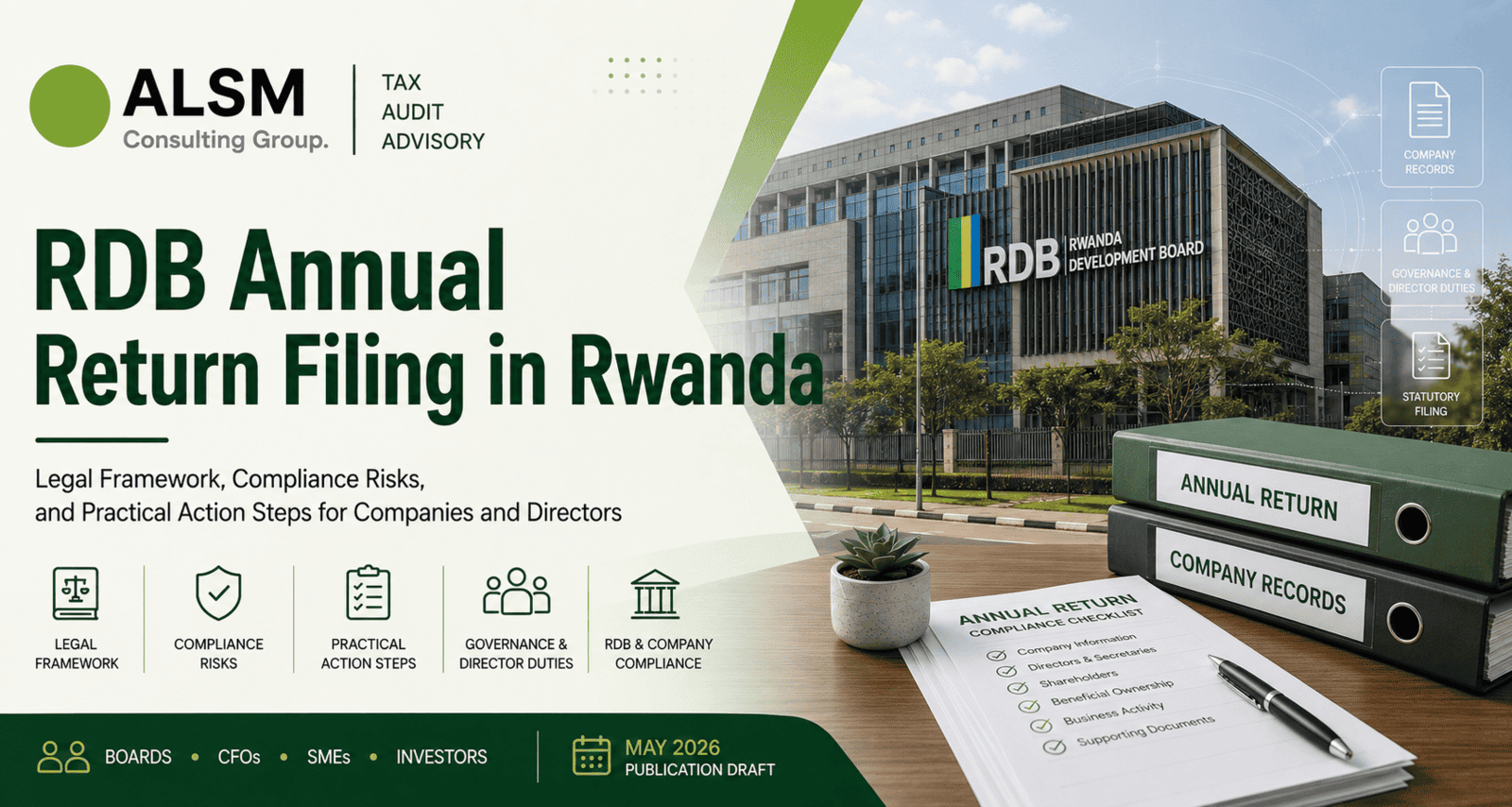
For many businesses in Rwanda, annual return filing is often viewed as just another administrative requirement. In reality, it is a critical legal and governance obligation that helps ensure a company's records remain accurate, transparent, and compliant with Rwandan company law.
Failure to file annual returns on time can expose companies and directors to regulatory penalties, reputational damage, and unnecessary compliance risks.
This guide explains the legal requirements, filing deadlines, common compliance mistakes, and practical steps companies can take to remain compliant with the Rwanda Development Board (RDB).
What is Annaul Return ?
An annual return is a statutory filing that provides the Registrar General with up-to-date information about a company, including:
- Company structure
- Directors and officers
- Shareholders and ownership information
- Registered office details
- Business activities
- Beneficial ownership information
The purpose of the filing is to ensure that the official company register accurately reflects the company's current legal and operational status.
While many organizations see annual returns as a routine filing exercise, the process often reveals underlying governance issues such as outdated shareholder records, unrecorded director changes, incomplete beneficial ownership information, or inconsistencies in corporate documentation.
Annual return filing requirements are governed by Article 332 of Law No. 007/2021 of 05/02/2021 governing companies.
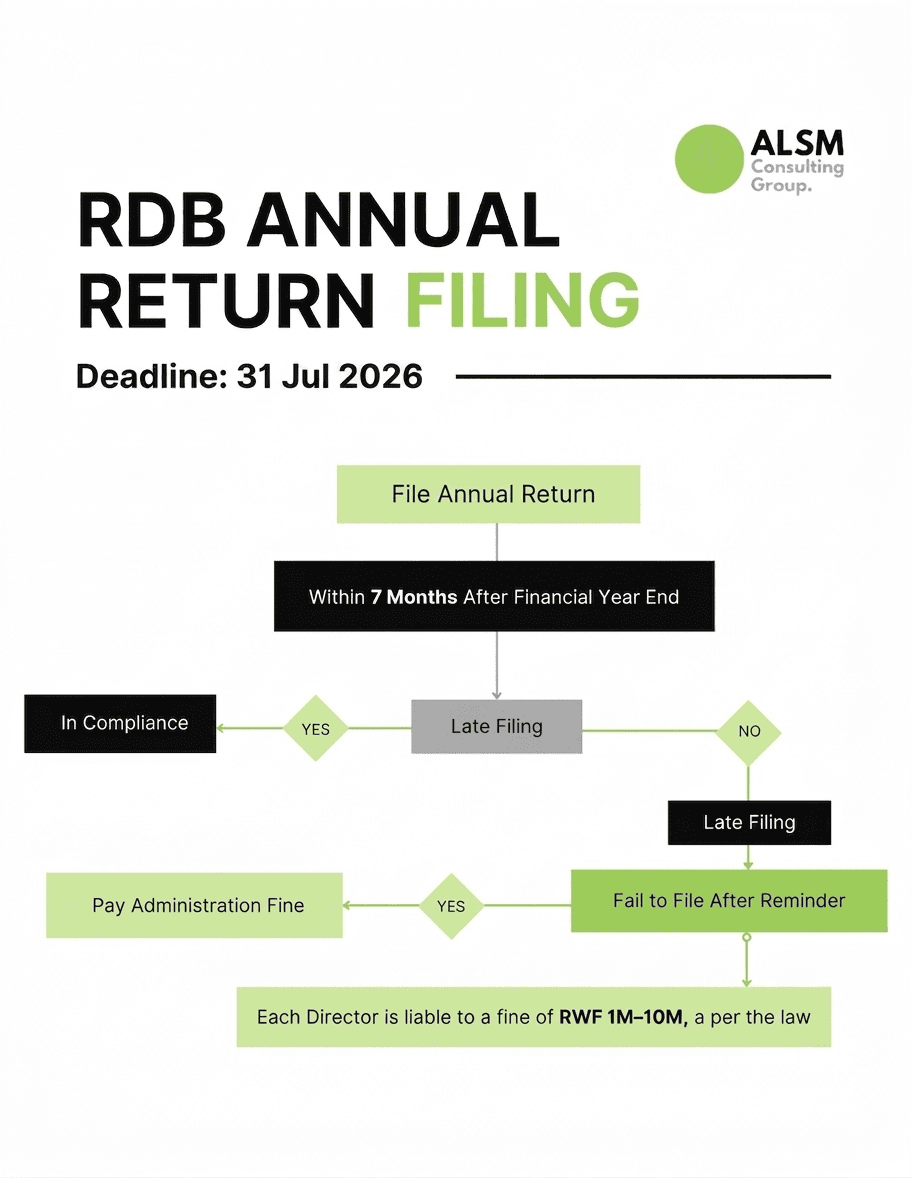
Under this provision, every registered company must file its annual return within seven months after the end of its financial year
For example:
- Financial Year End: 31 December 2024
- Annual Return Filing Deadline: 31 July 2025
Companies should calculate their filing deadline based on their actual accounting reference date rather than assuming all companies follow a calendar-year reporting cycle.
Why Annual Return Compliance Matters
Annual return filing serves a broader governance purpose beyond meeting a legal requirement.
Maintaining accurate company records demonstrates:
- Strong corporate governance
- Regulatory compliance
- Transparency to investors and lenders
- Readiness for due diligence and transactions
- Effective management oversight
Banks, investors, regulators, and potential business partners often view filing compliance as an indicator of an organization's governance discipline and operational maturity.
Deadline for Filing
The Connection Between Annual Returns and Beneficial Ownership
Annual return compliance is closely linked to beneficial ownership registration requirements in Rwanda.
Companies with complex ownership structures, foreign investors, nominee arrangements, trusts, or recent share transfers frequently discover discrepancies when preparing their annual returns.
As part of the filing process, organizations should verify that beneficial ownership records are accurate, complete, and aligned with their shareholder information.
A Practical Approach to Annual Return Compliance
To avoid last-minute challenges and compliance risks, companies should adopt a structured filing process.
1. Confirm Your Financial Year-End
Do not assume your company follows a 31 December reporting cycle.
Verify your accounting reference date and calculate the filing deadline accordingly.
2. Finalize Annual Accounts Early
Finance teams should complete annual financial statements well before the filing deadline.
Where companies report under IFRS or other reporting frameworks, presentation and disclosure matters should be resolved early to prevent delays.
3. Reconcile Corporate Records
Review all company records to ensure they accurately reflect the current legal position of the business.
This includes:
- Directors
- Shareholders
- Registered office information
- Share capital details
- Corporate structure changes
4. Verify Beneficial Ownership Information
Before filing, ensure all beneficial ownership information is updated and supported by appropriate documentation.
This step is particularly important for companies with foreign investors, layered ownership structures, or control arrangements that may not be obvious from the share register.
5. File Before the Deadline
Best practice is to establish an internal filing deadline several weeks before the statutory deadline.
This helps avoid:
- Approval bottlenecks
- Technical portal issues
- Missing documentation
- Last-minute compliance risks
Financial Penalties
Continued failure to file annual returns may result in director-level fines ranging from
RWF 1 million to RWF 10 million.
Regulatory Scrutiny
Late filings may trigger regulatory follow-up actions and increased scrutiny from authorities.
Director Liability
Directors may face personal financial exposure where filing defaults remain unresolved.
Reputational Damage
Poor compliance practices can negatively affect relationships with:
- Banks
- Investors
- Lenders
- Business partners
- Potential acquirers
Inaccurate or outdated company records can complicate due diligence exercises, financing transactions, mergers, acquisitions, and investment activities.
Common Mistakes Companies Make
Based on practical compliance experience, several recurring issues contribute to filing delays and compliance failures:
- Waiting until the filing month to begin preparing records
- Assuming the accounting reference date without verification
- Neglecting beneficial ownership updates after ownership changes
- Treating annual returns as a simple administrative form rather than a legal declaration
- Failing to coordinate finance, legal, and compliance teams around a single filing timetable
Avoiding these mistakes can significantly reduce compliance risks and improve filing efficiency.
Annual Return Filing Checklist
Before submitting your annual return, ensure the following actions have been completed:
✅ Verify the accounting reference date and filing deadline
✅ Finalize annual accounts and supporting documentation
✅ Review director and shareholder information
✅ Confirm registered office details
✅ Update beneficial ownership records
✅ Assign a responsible officer to manage the process
✅ Retain evidence of filing and maintain compliance records
Final Thoughts
Annual return filing should be treated with the same importance as tax compliance and statutory financial reporting.
Companies that start early, maintain accurate records, and integrate annual return obligations into their governance calendar are better positioned to avoid penalties, demonstrate strong corporate governance, and maintain regulatory compliance.
The most successful organizations do not treat annual returns as an emergency task. Instead, they build the process into their annual compliance cycle, ensuring that governance, legal, and financial records remain accurate throughout the year.
By taking a proactive approach, businesses can reduce regulatory risk, improve transparency, and strengthen their overall compliance framework.

Sunny MATETI
Managing Partner
Chartered Accountant and Certified Public Accountant, I excel in managing intricate tasks, adhering to strict deadlines, and providing outstanding results. My expertise is grounded in a solid 17+ years of experience in auditing, accounting, tax, and advisory services.
Need Assistance?
Don’t wait until the deadline. Our experts are ready to assist you with your RDB Annual Return or Beneficial Ownership registration.